The Ins and Outs of Ear Infections
GLVH
Ear infections are a common medical issue for dogs and cats and comprise most commonly the outer ear (otitis externa) and less often the middle and inner ear (otitis media/interna). Below I will describe what might indicate your pet has an ear infection, how we confirm it and what treatments can be offered for it. Another component that I will go through is why your dog or cat even got an ear infection in the first place.
Signs your pet has an ear infection:
The thing about ear infections is that the clinical signs of one often stand out and are easily detected at home. Before clinical signs there could be a low-grade infection brewing, but normally we do not notice it until the patient becomes obviously bothered by it.
Common signs include:
· Head shaking/ear flapping
· Scratching at their ears
· Sometimes causing trauma to their ears with their nails
· Rubbing their head on the ground/furniture
· Strong odour from the ears
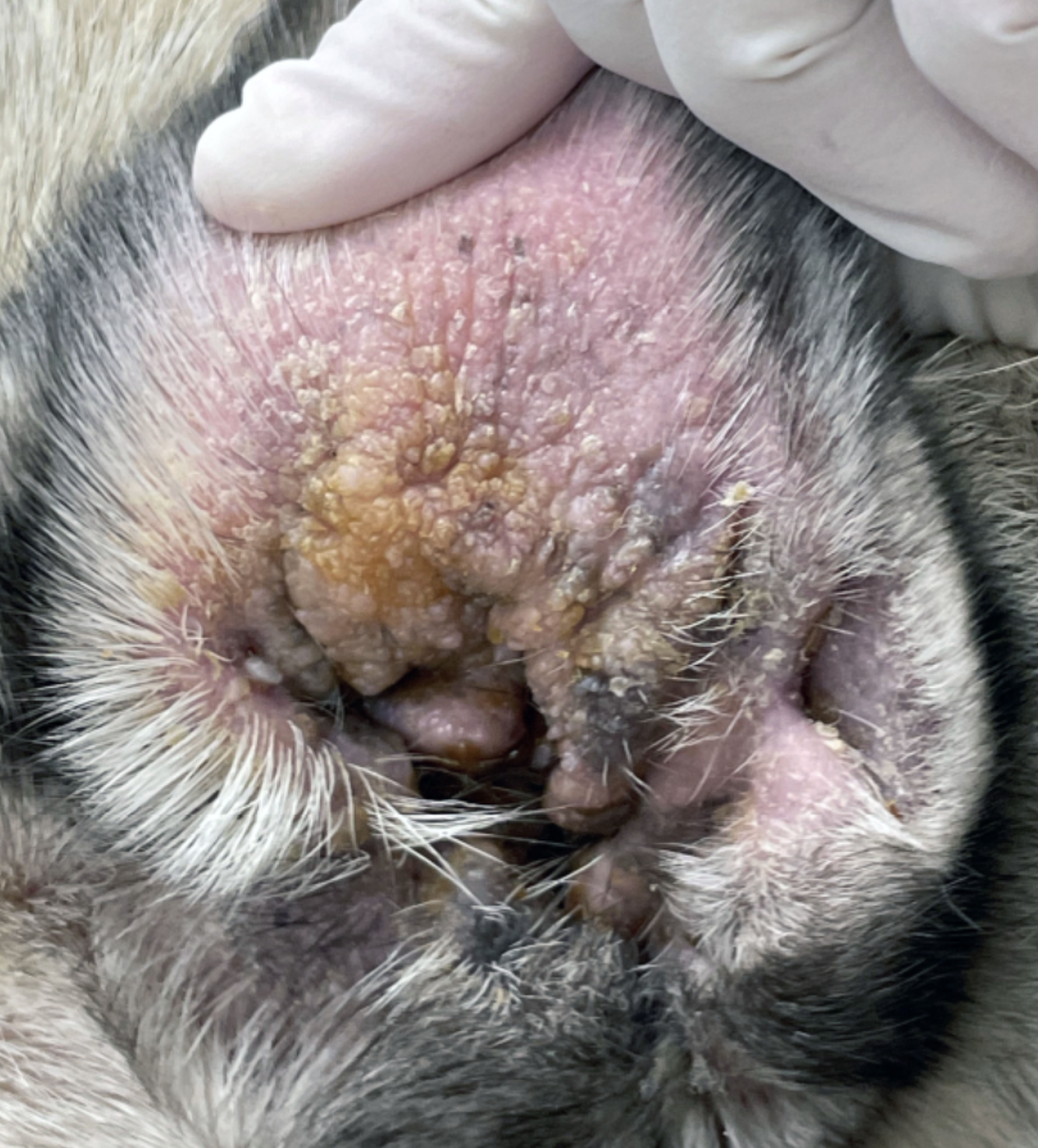
· A lot of debris in the canals (can we waxy, more fluid, may be dark brown, gold, yellow, green, black as examples)
· Redness or inflammation of the ear
· Or pain when touched
· If the ear is bothered long enough the pinna, or ear flap, can become chronically thickened

Another complication of severe head shaking is what is known as an aural hematoma. This is where with so much shaking and flapping of the ears that small blood vessels within the ear pinna open and bleed and becomes a pocket of blood within the centre of the tissue layers. With time it may go away on its own, but often frequent draining it or even surgery may need to be performed in order to correct it.
If the middle/inner ear become involved then we can start to see other clinical signs like a head tilt, circling in one direction, deafness, pain when trying to open the mouth or reluctance to eat, along with many or all of the above signs seen with an outer ear infection.
With any of this evidence it is worth a call or visit to your vet in order to address a likely ear infection before it escalates further.
What your veterinarian may do when to confirm an ear infection:
Initially, your vet will get a history on what your dog or cat may have been doing, has there been a change in diet or treats, were they are the groomers recently, are there any other changes to your pet’s health besides the ears.
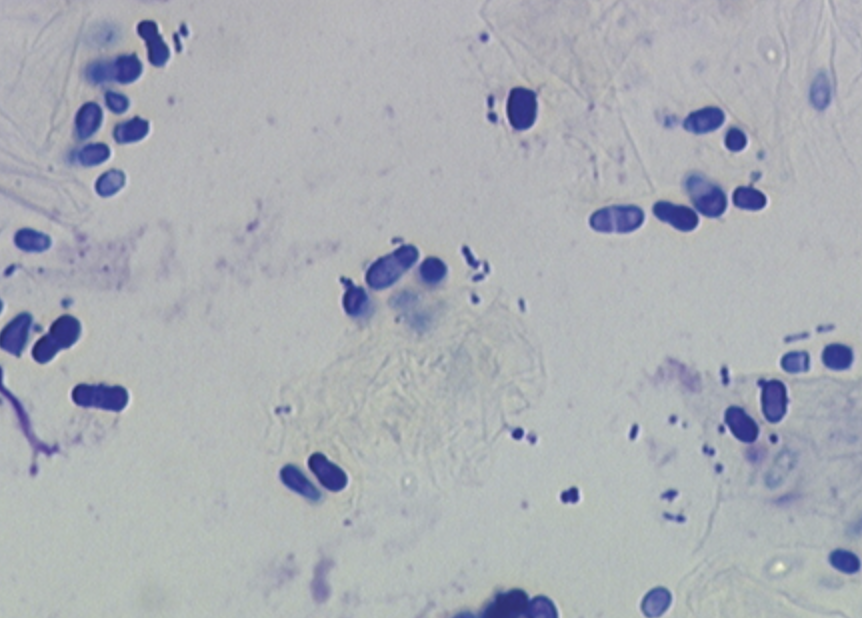
One of the most valuable tools is cytology from the ear canal. In this case the ear or ears will be swabbed and the debris collected put onto a glass slide, then prepared in order to examine it under a microscope. This allows your veterinarian to assess both ears for presence of bacteria, yeast, parasites, foreign material, etc. and help guide an appropriate therapy.
Another valuable tool is the otoscope, that with a cooperative and not too painful patient, the vet can take a look into the ear canal to assess how it is, plus hopefully get a good look at the ear drum (tympanic membrane) to ensure it is still intact or not.
If the middle/inner ear seems involved and thorough neurological exam should be performed to help determine the extent and possible cause.
In complicated and chronic cases diagnostics such as biopsy, CT scans and BAER testing for deafness may be recommended and would generally be done at a specialist facility.
Ways to treat ear infections:
In most cases of otitis externa a local medication into the ear itself is going to be the treatment of choice. This way the highest concentration of the drugs are in the ear canal where the problem is, and there is reduced systemic absorption and side effects.
Most ear medications consist of a combination of three types of drugs: antibiotic, antifungal and anti-inflammatory. This allows the drug to help with bacterial overgrowth, yeast overgrowth and pain and inflammation, making them quite effective. Where we need to be careful is when the ear drum is known or suspected to be ruptured, in that case many ear drops cannot be utilized and other options, such as systemic medications are going to need to be used.
In serious, ongoing cases, flushing the ears out with saline under general anesthesia can be performed by your veterinarian to try and really get them clean and medicated. A specialist surgeon can perform a procedure call a bulla osteotomy where part of the bone is removed from the middle ear so it cannot become chronically infected.
Some patients prone to ear infections may benefit from maintenance drops that act like astringents or ear cleaners to keep the canal dry and clean, and thus prevent infection from starting up. Speak to your veterinarian if you think your pet might benefit from a maintenance ear plan.
What may have caused my pets’ ear infection:
There can be a variety of reasons your pet may get otitis externa. Some of the most common causes include:
· Food allergies
· Excessive hair in the canals
· Narrowed canals that a patient is born with
· Moisture from grooming, swimming, excessive ear cleanings
· Masses or polyps present that obstruct the canal
· Foreign material entering the ear canal
· Systemic disease, such as viruses, fevers, immune suppression
· Autoimmune diseases that effects the skin
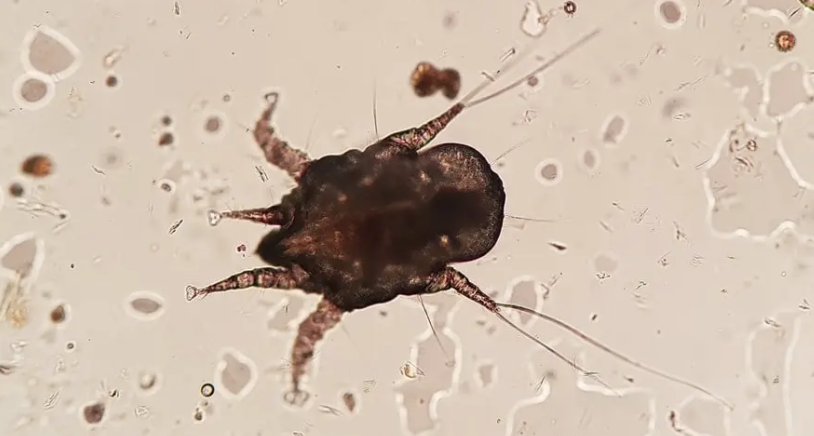
· Parasites such as ear mites
· Glandular disorders where excess ear wax accumulates
Any of these above reasons can allow the environment of the ear canal to change in such a way that bacteria and /or yeast can overgrow and colonize. This in turn is the ear infections we commonly see in the outer ear.
Causes of middle or inner ear infections often derive from:
· Extension of otitis externa thought the eardrum
· Infection making its way internally through the auditory canal or eustachian tube
· Or a blood borne pathogen migrating into the ear

Ear infections are a common medical issue seen at any vet clinic. If you think your pet has an ear infection, or is known to have chronic ear issues, hopefully this blog post provided some clarification on what might be the cause and what to expect when you bring them to your veterinarian to have their ears looked at.
Dr. Hillary