Canine Vaccines
GLVH
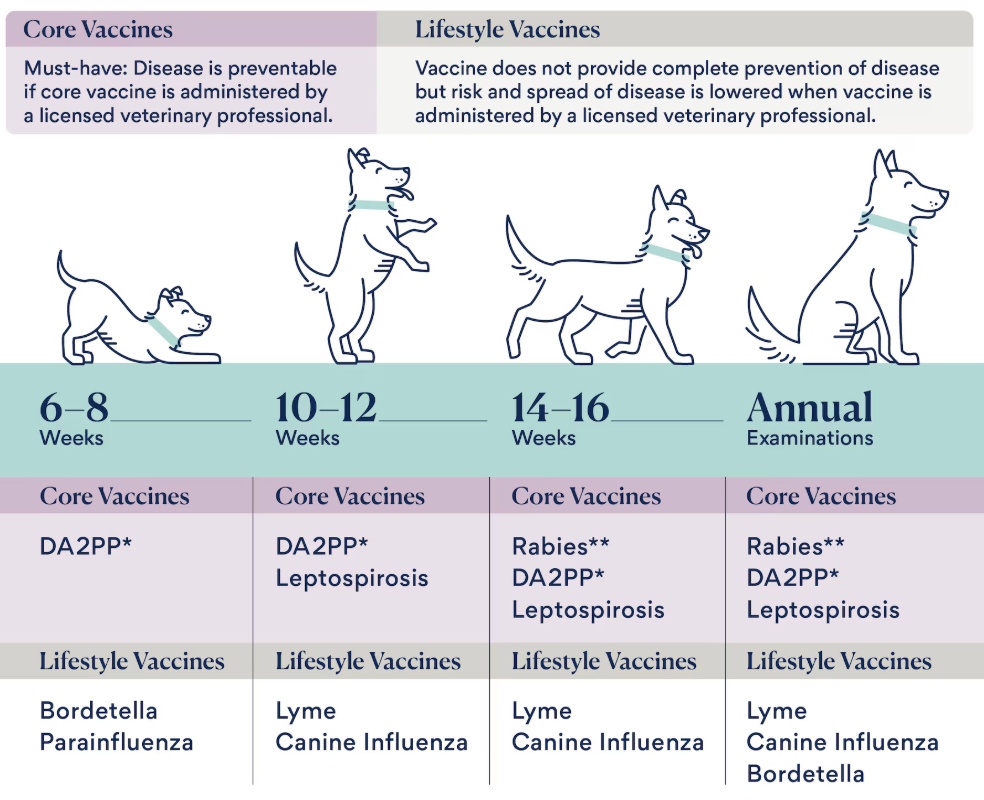
In this discussion we will be covering the canine core and non-core vaccines that can be part of your dog’s health prevention plan. At this time, in North America, we often refer to the American Animal Hospital Association (AAHA) to guide us on what is considered core and non-core vaccines, as well as the timing of administration from puppyhood to adulthood. The determination of what vaccines and when is based on disease risk, severity of disease and access to good vaccines.
Core Vaccines
Rabies Vaccine:
Rabies is a virus that is almost 100% fatal when acquired by your dog and scarier yet is the fact that it is zoonotic and can be transmitted to other animals and humans. Transmission to your dog generally occurs when there is a bite from another animal, such as a bat, raccoon or fox, but can be any mammal. Other forms of contact may also cause disease, such as contact with saliva or other bodily fluids through a scratch or break in the skin. Some people may think that Canada and North America in general are free of the rabies virus, but this is not true. Every year there are wild animals tested positive for rabies in Ontario, and with more importations of dogs from around the world there is increased risk as well.
The rabies virus can cause behavioural changes, such as anxiety, seeking solitude, apprehension, fever and itching. Many cases have a paralytic form where the dog is lethargic, has difficulty swallowing, drooling, change in their bark and paralysis in the limbs. Occasionally dogs acquire the “furious” form where they are aggressive, will bite, have paralysis, seizures and abnormal gait.
The rabies vaccine is a very good vaccine, in that when used appropriately it is very effect against the disease. In Ontario, it is legally required to have your dog vaccinated against rabies. Most canines receive their first rabies vaccine at their 12- or 16-week puppy booster visits. After that the vaccine is boosted 1 year later, then followed by a regular 3-year boost thereafter for your dog’s life (this will depend on the manufacturer and their specifications for required boost periods).
DHPP or DA2P Vaccine:
This is a combination vaccine including distemper virus, adenovirus/hepatitis, parvovirus and parainfluenza virus. All viruses included cause harmful disease or death and have thus been considered worth vaccinating our dogs against as a core vaccine. This combination vaccine is generally given 3 times during puppyhood (8-, 12- and 16-weeks), then at a set interval thereafter (1-year boosts, 2- or 3-year boosts based on manufacturer).
Canine distemper virus can cause disease in many species that include dogs, wild canids, raccoons and skunks that is highly contagious. In dogs it is seen mostly in puppies, but can appear in older dogs, and most that acquire the disease are inadequately vaccinated against it. Clinical signs of distemper often start as respiratory illness, moving to gastrointestinal illness, followed by neurological abnormalities. In dogs that survive the virus generally have associated disorders that they carry for life that include hyperkeratosis of their paw pads, ocular changes, epilepsy, muscle twitches or spasms, and potential loss of smell.
Canine adenovirus or hepatitis caused by this virus is now considered an uncommon disease in our canine companions, but was historically a severe and often fatal disease. Some sporadic cases are still reported, so it is still part of this combination vaccine. Mainly it causes hepatitis or disease of the liver, but can also cause tracheobronchitis and can be part of the kennel cough vaccine as well.
Canine parvovirus is a very common cause of enteritis (small intestinal inflammation/infection) in dogs. The highest risk of acquiring this virus is from other domestic dogs shedding viral particulates in their feces, where it can remain stable in the environment for long periods. Unvaccinated puppies and dogs are at highest risk, and the virus is often fatal in puppies due to severe loss of fluids and inability of the intestine to recover quickly enough. Significant diarrhea that has a very strong odour is most common, along with vomiting, retching, lethargy, dehydration, and fever. Many puppies can survive this virus, but generally require aggressive and prolonged hospitalization. Vaccinated dams and appropriately vaccinated puppies help reduce the chance of this virus causing harm. Also cleaning environments with disinfectants effective against parvovirus can help reduce or eliminate it from the environment.
Canine parainfluenza virus is another virus that is a component of tracheobronchitis or kennel cough. It is highly contagious and airborne pathogen that causes respiratory signs such as a hacking cough, fever, lethargy, and nasal discharge. Prevention through vaccination helps reduce or eliminate the illness this virus can cause.

Leptospirosis Vaccine:
This vaccine has recently been moved to a core vaccine for dogs in North America as the bacterial disease, Leptospirosis is both zoonotic (can transmit to humans and other animals), causes severe disease and possible death. There are many serovars of this disease and most vaccines contain 4 variants to build immune protection. Two initial vaccines are given 3-4 weeks apart, followed by annual boosters to maintain adequate immunity. Most dogs are considered at risk now for this disease as it is carried by other animals (skunks, rodents, raccoons, etc.) and shed in their urine where it can survive for some time in a moist environment (pools of water, puddles, damp grass, streams, etc.).
Any age of dog is at risk and transmission to humans poses a possible risk that is best to be avoided. Signs that may be seen include fever, lethargy, anorexia, dehydration, ocular abnormalities, and more. Severe disease includes kidney injury (most common), but liver disease is common, and subsequent vomiting and diarrhea or respiratory clinical signs become evident. Vaccination is effective against this bacterial disease and newer formulations of the vaccine have greatly reduced adverse reactions to the dogs receiving the vaccine from the older manufactured versions.
Non-Core Vaccines:
Bordetella Vaccine:
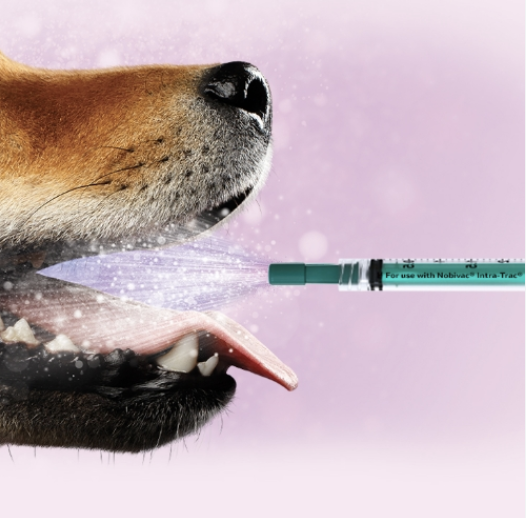
This vaccine is utilized to prevent or reduce symptoms of kennel cough in dogs. Most effectively, this vaccine is administered orally or intranasally, rather than injectable (though this is still an option for those dogs that administration in the mouth or nose is not achievable). This vaccine is given once when life-style of the dog would benefit from it (goes grooming, boarding, spends a lot of time around other dogs), and is boosted annually thereafter as needed. Kennel cough or canine infectious respiratory disease (CIRD) is a contagious disease that is often made up of a variety of bacterial and viral diseases in combination, so using Bordetella along with adenovirus and parainfluenza vaccines is most beneficial (see DHPP above). Clinical signs of CIRD involve hacking cough, nasal and ocular discharge, conjunctivitis, enlarged lymph nodes at the throat, fever and lethargy. The disease is generally self-limiting, but occasional supportive treatment and antibiotics are needed.
Lyme Vaccine (Borrelia):
The bacterial pathogen, Borrelia burgdorferi, is the cause of Lyme disease and is acquired from Ixodes ticks that carry it and transmit it to our dogs when they feed for a prolonged period. Most effective against Lyme disease is tick prevention, but in dogs with a high risk adding in the Lyme vaccine is considered good practice. These dogs may include ones that are in areas with high tick numbers, dogs that spend a lot of time outside in the woods, fields, etc., or already compromised from kidney disease or immunosuppression. Only about 5% of dogs that are Lyme positive become clinically ill. Most common we see fever, lethargy, and shifting lameness/Lyme arthritis. In severe cases the kidneys become involved, called Lyme nephritis, that can lead to renal failure and death. For more details on testing and treating Lyme positive dogs see my March 2025 blog post that discussed fleas and ticks!
Canine Influenza Vaccine:
Canine influenza viruses do circulate in North America and some serotypes can cause disease, though often indistinguishable from other respiratory pathogens of CIRD. A vaccine does exist as occasionally severe and fatal disease occurs from influenza in dogs. Routine use of this vaccine is not recommended as the virus is not endemic to an area, but will appear as outbreaks in geographical locations that then vaccination may become beneficial. Most clinical signs, if present are mild respiratory signs much like kennel cough. Severe cases present as life-threatening pneumonia.
I hope this information helps clarify what your dog is getting vaccinated for and why. Stick around for feline vaccines next month!
Dr. Hillary